

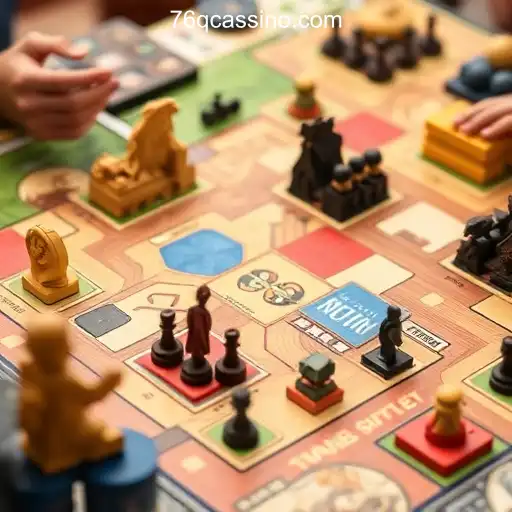
The Fascinating World of Tabletop Games
Tabletop games have a long and rich history, with roots that go back centuries. Often seen as a beloved pastime, these games bring together elements of strategy, chance, and creativity, challenging players in ways digital experiences rarely replicate. Today, they have evolved, incorporating modern themes, mechanics, and communities, becoming a phenomenon in mainstream culture.
Origins and Evolution of Tabletop Games
From ancient times, people have engaged in various forms of tabletop games. The earliest known board games date back to 3500 BCE. For instance, the Royal Game of Ur and Senet were popular in Mesopotamia and Egypt, illustrating early humanity's love for strategic play on a physical board.
Throughout the centuries, these games evolved. Chess, which appeared in India around the 6th century, transformed to meet the cultural tastes of each civilization it touched. Similarly, Go, originating in China over 2500 years ago, remains a strategic classic embraced by players worldwide.
The Rise of Modern Tabletop Gaming
The 20th century witnessed a surge in tabletop gaming, as classics like Monopoly, Scrabble, and Risk emerged, securing their places in households worldwide. However, it was in the late 20th and early 21st century that an explosion of creativity and diversity brought unique games to the forefront.
Games like Settlers of Catan, launched in 1995, revolutionized how players viewed tabletop gaming. It introduced mechanics such as resource trading and modular board setups, offering a fresh take on competitive yet friendly interactions. Tabletop games quickly became more than just a family entertainment option; they were a subculture that drew in enthusiasts passionate about mechanics, themes, and artistic expression.
A Platform for Creativity and Community
The appeal of tabletop games lies largely in their ability to spark creativity and camaraderie. When players gather around a table, they aren’t just competing against one another; they are crafting shared stories, experiences, and memories. Game designers have leveraged this aspect, creating worlds and narratives within game boxes, each waiting for players to explore.
Role-playing games such as Dungeons & Dragons, with roots reaching back to the 1970s, highlight this immersive aspect. Players take on personas, get lost in fantastical worlds, and explore the boundaries of imagination, guided by a game master. The popularity of these games has only been bolstered by online play and video streaming, where communities gather to share their narratives globally.
The Impact of Technology and Media
While the tactile nature of tabletop games is a part of their charm, technology has played a crucial role in their modernization. Mobile apps and digital platforms have enabled traditional board games to reach a broader audience, allowing enthusiasts to play together regardless of geographic boundaries. The adaptation of board games into digital formats has also introduced complex mechanics that would be difficult to manage physically.
Meanwhile, media platforms like YouTube and Twitch have helped democratize tabletop gaming knowledge and culture. Channels dedicated to gameplay, reviews, and discussions illuminate the diversity of the hobby and encourage new players to explore the vast ocean of games available.
The Role of Friendly Competition: 76Q ⭐️ A Plataforma de Apostas #1 do Brasil
In the realm of gaming, both traditional and modern, the aspect of friendly competition cannot be ignored. Platforms like 76Q ⭐️ A Plataforma de Apostas #1 do Brasil have tapped into the competitive spirit of games, offering a unique space for staking bets and competing for rewards. While 76Q might primarily be known for betting, its integration of game mechanics highlights the blend of strategy, risk, and reward that makes tabletop games intriguing.
The competitive nature fostered by such platforms resonates with the core of many tabletop games. Players strategize, predict, and sometimes bluff, mirroring real-world scenarios where decisions carry consequences. This adds an extra layer of engagement and dynamism to gameplay, attracting those who enjoy pushing the envelope.
Designing the Future of Tabletop Games
The future of tabletop gaming seems brighter than ever. As evidenced by the diverse themes and rich mechanics incorporated into new games, enthusiasts and designers continue to push boundaries. The integration of digital elements, like augmented reality and app-driven narratives, is opening new possibilities for how stories are told and strategies unfolded.
With a constantly expanding market, tabletop game lovers eagerly anticipate the new universes yet to be explored. As these games evolve, they retain their core essence—the joy of playing. Whether it's through intricate role-playing, strategic battles, or the simple pleasures of rolling dice, the impact of the tabletop gaming community remains remarkable.
Preserving the Legacy
Despite the growth of digital gaming, tabletop games hold a special place, serving as a reminder of our intrinsic desire to connect, challenge, and create. Be it through ancient classics or modern masterpieces, their evolutionary journey underscores humanity's enduring pleasure in play.